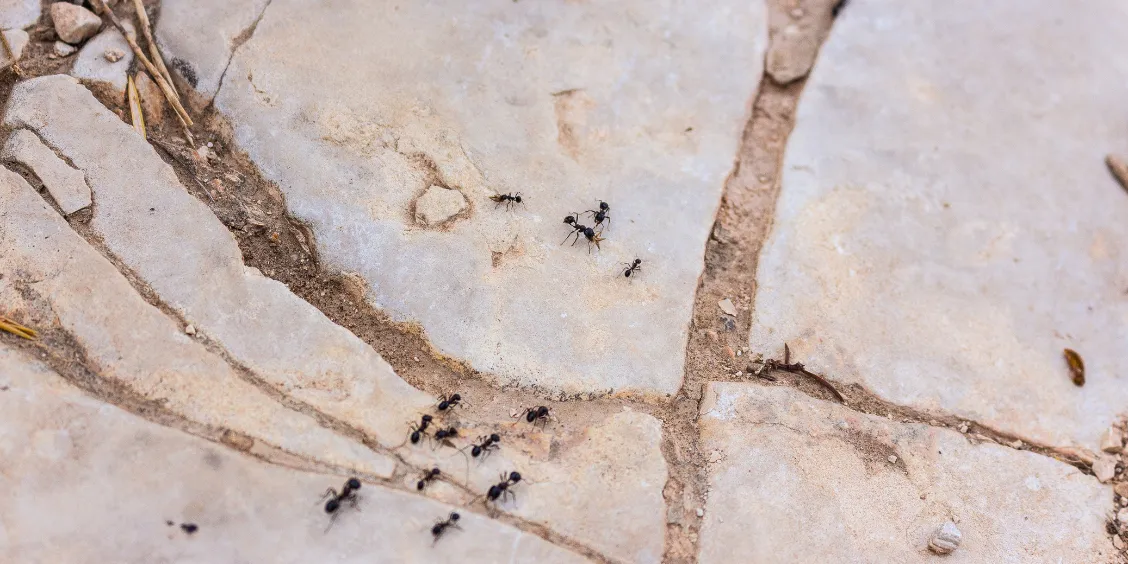
You wipe the bench, and an hour later the line of ants is back. Ant trails indoors are one of the most common pest problems in late spring, in homes and businesses alike.
Quick answer: Ants trail indoors in late spring because their colonies are growing and workers are searching for food and water. To stop a trail, find what the ants are after and where they are getting in, remove the food source, avoid spraying the trail, and treat the colony rather than only the ants you can see.
Why Ants Trail Inside in Late Spring
As the weather warms, ant colonies grow quickly and need more food. Worker ants forage further, and when one finds food it leaves a scent trail for the rest of the colony to follow. That is why a single ant on the bench becomes a line within hours. Hot, dry spells and heavy rain can both push ants indoors looking for water or shelter.
How to Stop an Ant Trail, Step by Step
Step 1: Follow the trail both ways
Watch where the ants are going and where they are coming from. The destination tells you what they want, and the other end leads you towards the entry point.
Step 2: Find what they are after
Common targets include:
-
Crumbs and sticky spills on benches and floors
-
Pet food bowls
-
Sugar, honey and open pantry items
-
Bins and recycling
-
Dripping taps and damp areas under sinks
Step 3: Remove the food source
Wipe up spills, store pantry food in sealed containers, pick up pet bowls between meals and empty kitchen bins regularly.
Step 4: Wipe away the scent trail
Clean along the path with warm soapy water. This removes the trail other ants are following, although it won't stop the colony sending out new foragers.
Step 5: Note the entry points
Ants get in through gaps around windows and door frames, cracks in walls and skirting boards, holes around pipes and cables, and plants or branches touching the building. Noting where they appear helps target treatment.
Step 6: Treat the colony, not just the trail
The ants you can see are a small part of the colony. Lasting control means treating the nest behind them.
Mistakes That Make Ant Trails Worse
-
Spraying the trail with surface spray. It kills the ants you see, but the colony survives and the trail often returns somewhere else.
-
Only cleaning. Cleaning removes the scent trail, but the colony is still there.
-
Ignoring outdoor nests. Nests in gardens, under paving or against the walls are often the source.
-
Assuming every ant is the same. Different ants respond to different treatments, which is why identification matters.
When to Call a Professional
If trails keep coming back after you have removed food sources, appear in several rooms, or seem to come from inside the walls, it is time for professional ant control. Our earlier guide on when to call a professional for ants covers the warning signs in more detail.
Frequently Asked Questions
Why do ants keep coming back to the same spot?
They follow scent trails left by other workers. Unless the trail is removed and the colony is treated, they will keep returning.
Should I seal the entry points straight away?
Sealing gaps helps in the long run, but while the colony is active the ants will usually find another way in, so treatment comes first.
Ant Control for Homes and Businesses
Rossy Pest Services provides ant control for homes and businesses across Geelong, the Surf Coast, the Bellarine Peninsula, Ballarat, Melton and Melbourne, using eco-friendly treatments.
If ant trails keep appearing inside your home or workplace, contact Rossy Pest Services to arrange an inspection. Request a quote or call (03) 5213 0133.