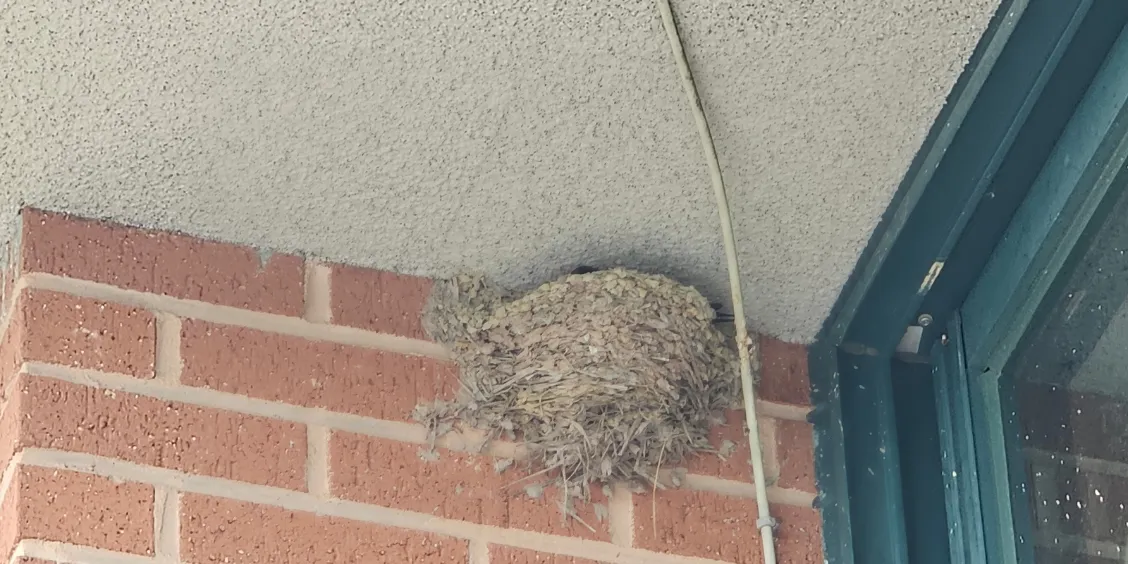
Birds on a commercial building are easy to ignore until the droppings build up, a gutter blocks or a customer complains. Spring and early summer are when many of these problems come to a head, because it is when birds are most actively nesting and raising young.
Why Spring Brings Bird Problems to a Head
Feral pigeons can breed for much of the year, but nesting activity picks up as the weather warms. Ledges, roof spaces and signage that were quiet over winter become nesting sites, and once birds have raised young in a spot, they tend to keep coming back to it.
What You Notice, What It Means and What to Do
Droppings building up on ledges, walkways or signage
What it means: birds are roosting overhead regularly. What to do: arrange an inspection of roosting points and a safe clean-up.
Nesting material in gutters, downpipes or rooftop plant
What it means: birds are nesting on the building. What to do: have the nest assessed and removed, and the area proofed.
Birds getting into roof spaces or warehouses
What it means: gaps in the building are giving them access. What to do: find and proof the entry points.
Birds gathering around loading docks or bins
What it means: food waste is attracting them. What to do: tighten waste handling and keep the area clean.
Small mites appearing near roof spaces or windows
What it means: birds may be nesting nearby. What to do: arrange an inspection, as nests can carry mites.
The Risks for Businesses
Bird activity affects more than appearance:
-
Droppings are a hygiene risk and can make walkways slippery
-
Nests block gutters and downpipes, leading to water damage
-
Droppings can damage roofing, signage and equipment over time
-
Birds inside warehouses can contaminate stock
-
A building covered in droppings makes a poor impression on customers
Sites That Need Extra Attention
Warehouses, factories, shopping centres, hotels and schools are common problem sites, along with any building with high ledges, open roof spaces or exposed food waste. Our earlier post on pigeon problems at hotels and commercial buildings covers the health risks in more depth.
How Bird Proofing Works
Professional pigeon and bird control focuses on making a site unattractive to birds rather than simply moving them on. Depending on the site, it can include:
-
An inspection of roosting and nesting points
-
Safe removal of nests and droppings
-
Proofing gaps and entry points into roof spaces
-
Deterrents fitted to ledges and other landing areas
Native birds are protected in Victoria, so a professional will confirm which species are present before any work starts.
Frequently Asked Questions
When is the best time to bird-proof a building?
Before birds become established. Proofing early in the season stops them settling in to nest.
Can I remove the nests myself?
Nests and droppings can carry disease and mites, and the work is often at height. It is safer to have them removed professionally.
Will birds come back after the nests are removed?
They often try to, which is why proofing the nesting sites matters as much as removing the nests.
Bird Control Across Victoria
Rossy Pest Services provides commercial pest control and bird proofing for businesses across Geelong, the Surf Coast, the Bellarine Peninsula, Ballarat, Melton and Melbourne.
If birds are nesting on your building this spring, contact Rossy Pest Services to arrange an inspection. Request a quote or call (03) 5213 0133.